
How Much Alimony Can I Expect to Receive?
There is no exact formula for calculating how much you may receive from a former spouse through alimony. In Pennsylvania, courts have the power to determine how much one is required to pay in alimony and thus how much you will receive.
Courts look at several factors to determine how much you may be entitled to. They weigh factors relevant to both you and your former spouse throughout the marriage. A perk for someone receiving the alimony payment is that the court also considers how a former spouse's future life may be affected because of the divorce.
Additionally, courts look into how long the spouses were married, how much they brought into marriage, any marital misconduct, the established standard of living, and many other factors.
Another important factor most people associate with alimony payments is income or earning capacity. Earning capacity is not always how much a person is making but how much that person could be making considering their age, education, experience, etc. Courts will look at someone’s earning capacity if that person is underemployed or intentionally decreasing his/her income.
When it comes down to determining exactly how much you may receive, there is no clear-cut answer. After all, the discretion is left up to the court. That said, you may be more prepared based on some of these factors that courts consider.
In an attempt to avoid being blindsided by how much alimony you may (or may not) receive, evaluating these factors may be beneficial. Collecting information on your part in preparation for litigation, will save you time later on.
Just remember that the court makes the ultimate decision regarding the amount of alimony. There is no clear-cut rule requiring simple math. Instead, it is actually much more complicated and may require more time and effort to figure out than you may be anticipating.
*Disclaimer: the advice provided is for informational purposes and is not intended as legal advice. It should not be relied on, nor construed as creating an attorney-client relationship.
What is the Difference Between Annulment and Divorce?
Most people know what it means to get a divorce, but an annulment is not so common. What makes them different from each other? As you may know, the result of a divorce or an annulment is that the two spouses are no longer legally married.
The biggest difference is that an annulment declares the marriage to be invalid and voided. This means that in the eyes of the law, the marriage never existed.
A divorce yields a different result. A divorce does not undo the marriage, but rather it puts a legal end to the marriage.
Now that the difference is clear, how do you know which is most applicable to you? Lucky for you, the court lays out when you may pursue an annulment. The option for divorce is the default for ending a marriage while you must meet specific criteria to qualify for an annulment.
Generally, to terminate your marriage to your spouse, you will need to file for divorce. That is, unless you qualify for an annulment.
Annulments occur when one of the spouses lacked the ability to enter the marriage. This may happen if a person was too young at the time of marriage and lacked the court’s consent or lacked consent from a parent or guardian.
Additionally, one may qualify for an annulment if either party or both parties were under the influence of alcohol or drugs at the time of marriage; if either party was under duress or being forced to take part in the marriage; or if either party has a mental illness in which the other party did not know about at the time of the marriage.
If a person is under the age of 18 at the time of marriage and lacked proper consent, they are only eligible for an annulment so long as they have not gone back and ratified the marriage after turning 18 years old and so long as either party has requested an annulment within 60 days of the date of marriage.
The above is similar if a party was under the influence of drugs or alcohol at the time of the marriage. They have 60 days from the date of marriage to seek an annulment. If the parties decide to split up following these 60 days, they will no longer be eligible for an annulment but they will need to file for divorce.
*Disclaimer: the advice provided is for informational purposes and is not intended as legal advice. It should not be relied on, nor construed as creating an attorney-client relationship.
How are Assets Divided During Divorce?
Pennsylvania courts generally divide marital property equally. For the most part, either spouse should receive 50% of the marital property. This also means that 50% of any marital debts will also fall on each spouse. Although this is the general rule, the court may skew the distribution so that one spouse receives more than 50% of the marital estate.
Though divorce is a different experience for most people, the courts of Pennsylvania typically stick to the method of “equitable division of marital property” upon divorce.
First, what is considered “marital property” and what is “equitable distribution?” Generally, “marital property” is any property that either spouse has obtained throughout the marriage. It could also be property that a spouse owned before the marriage (or the increase in its value) but used for marital purposes. For those who have been married for quite a while, this could be a great deal of property to split up. So how do the courts do it?
Pennsylvania courts generally divide marital property equally. For the most part, either spouse should receive 50% of the marital property. This also means that 50% of any marital debts will also fall on each spouse. Although this is the general rule, the court may skew the distribution so that one spouse receives more than 50% of the marital estate.
It is also important to note that this 50/50 split does not mean that the spouses will continue to share ownership of the house or the car, but one spouse may receive the house worth $300,000 and the other spouse may get the car that is worth $40,000 along with the lake house that is worth $260,000. Each spouse now has an equal portion of the marital property.
So when does equitable distribution begin? Once a spouse has filed for divorce and the statutory separation period has ended, either spouse may request that the court divide the assets equally. The court does this by evaluating many factors to determine proper equitable distribution. Such factors include:
1.) How long the marriage lasted;
2.) Any prior marriages of either party;
3.) Age, health, income, liabilities, etc. of both parties individually;
4.) The contribution of one party to the educational support or increasing earning power of the other party;
5.) Any potential future acquisition either party may receive (capital assets and income);
6.) Sources of income (this includes medical, retirement, insurance, and other benefits);
7.) The contribution or use of marital property (weather leading to appreciation or depreciation of the marital property);
8.) The value of the property set apart to each party;
9.) The standard of living that was established during the marriage;
10.) The economic status of each party at the time the division of the property is to become in effect (this can be measured through employment of each party, the type of job, how long either party has had that job, etc.);
11.) Federal, state, and local tax implications associated with each asset;
12.) The expense to sell, transfer, or liquidate any piece of property; and
13.) Whether either party will be the primary custodian over any children.
You may notice that marital misconduct is not listed above. That’s right. The court does not consider marital misconduct—an extramarital affair or even domestic violence, when determining how to distribute the marital estate.
In simple terms, the court will determine what constitutes marital property between the two parties and then it will value that property and distribute the property in a method they find to be equitable to both spouses. Equitable, however, may not mean equal.
*Disclaimer: the advice provided is for informational purposes and is not intended as legal advice. It should not be relied on, nor construed as creating an attorney-client relationship.
SMB M&A - Insurance Coverage: Protecting the Business Against Storms
No one would buy a boat and set sail without ensuring it's insured in case of storms or unexpected challenges. Insurance coverage in a business is like checking if your boat has the proper protection.
Here's why it's crucial:
1. Types of Insurance: Think of this as the various shields your boat can have. Identify the types of insurance the business holds—property insurance, liability coverage, business interruption insurance, etc. Each type serves as a shield against different risks.
2. Coverage Limits: It's like checking the strength of your shields. Understand the coverage limits of each insurance policy. Are they sufficient to handle potential losses? Ensuring adequate coverage prevents financial gaps in times of need.
3. Claims History: Imagine checking the boat's repair history before buying it. Review the business's claims history. Are there patterns of frequent claims or a history of denied claims? It helps assess the effectiveness of the insurance coverage.
4. Key Person Insurance: Is the captain of your boat insured? Check if the business has key person insurance for critical team members. This provides financial support in case of their absence.
5. Policy Exclusions: Like reading the fine print of your insurance policy, understand the exclusions. What risks are not covered? Identifying exclusions helps you fill potential gaps in coverage.
Why Does This Matter for You?
Buying a business without understanding its insurance coverage is like embarking on a sea journey without checking if your boat is insured. Here's why it matters:
Financial Protection:
Just as you'd want insurance for your boat, understanding the business's coverage protects it from financial losses due to unforeseen events.
Operational Continuity:
Insurance coverage is like a life jacket for your business. It ensures operational continuity by providing financial support during challenging times.
Risk Mitigation:
Assessing insurance coverage is like checking the safety features of your boat. It helps identify and mitigate potential risks, ensuring a more secure investment.
Business Stability:
Like checking the seaworthiness of your boat, understanding insurance coverage contributes to the business's overall stability. It safeguards against unexpected storms.
In essence, insurance coverage is the safety net for a business. Taking the time to understand and strengthen these shields ensures a more secure and resilient journey. It's like making sure your boat looks good and can navigate the unpredictable waters of the business world.
*Disclaimer: this article is for informational purposes only. It is not providing legal advice. It does not create an attorney-client relationship.
SMB M&A - Data Privacy and Security: Safeguarding the Business's Digital Fortresses
When you buy a safe, you want to ensure that it can't be easily cracked and it protects what's inside. Data privacy and security in a business are like checking the digital fortresses for potential vulnerabilities.
When you buy a safe, you want to ensure that it can't be easily cracked and it protects what's inside. Data privacy and security in a business are like checking the digital fortresses for potential vulnerabilities. Here's why it's crucial:
1. Customer Data Protection: This ensures that safety is impervious to break-ins. Review how the business handles customer data. Are there robust measures in place to protect sensitive information? Data breaches could be costly and damaging to the business's reputation.
2. Compliance with Privacy Laws: It's like ensuring the safe complies with industry standards. Check if the business follows privacy laws and regulations. Non-compliance could lead to legal consequences and financial penalties.
3. Cybersecurity Measures: Imagine buying a safe with a faulty lock. Assess the business's cybersecurity measures. Are firewalls, encryption, and other tools in place to guard against cyber threats? Ensuring a secure digital environment is vital.
4. Employee Training on Security: It's like ensuring everyone knows how to handle the safe combination. Assess whether employees are trained in cybersecurity best practices. Human error is a common cause of data breaches, so education is critical.
5. Incident Response Plan: Like having a plan in case the safe is compromised, check if the business has an incident response plan. How quickly and effectively can they react if a data breach occurs? Preparedness helps minimize damage.
Why Does This Matter for You?
Buying a business without understanding its data privacy and security is unsafe. It would be like getting a safe without knowing its vulnerability to theft. Here's why it matters:
Financial Protection:
Just as a secure safe protects your valuables, strong data privacy and security keeps your business safe. It protects your business from financial losses due to data breaches.
Reputation Management:
A breach is like a crack in the safe. It tarnishes the business's reputation. Ensuring robust data security measures helps maintain customer trust and brand integrity.
Legal Compliance:
Just as you'd want a safe that meets legal standards, ensuring compliance with data protection laws shields the business from legal troubles and regulatory fines.
Business Continuity:
Like ensuring your safe is resilient, strong data security measures contribute to the continuity of business operations. They prevent disruptions caused by cyber incidents.
In essence, data privacy and security are the digital locks and keys of a business. Taking the time to understand and fortify these aspects ensures a secure and resilient digital environment. It's like making sure your new safe looks good and is impenetrable.
*Disclaimer: this article is for informational purposes only. It is not providing legal advice. It does not create an attorney-client relationship.
SMB M&A - Real Estate: Navigating the Business's Physical Grounds
Think about buying a house. Before you sign on the dotted line, you want to ensure the foundation is solid and there are no hidden surprises. Real estate in a business is like checking the property for potential issues.
Think about buying a house. Before you sign on the dotted line, you want to ensure the foundation is solid and there are no hidden surprises. Real estate in a business is like checking the property for potential issues. Here's why it's crucial:
1. Property Holdings: Think of this as checking the land registry. Identify and understand all the properties owned by the business. Are there any undisclosed properties or legal complications related to them?
2. Leases and Tenancy Agreements: It's like checking if the house is rented. Review all leases and tenancy agreements for the business's properties. Are there any long-term leases that might affect your plans for the space?
3. Zoning and Land Use: Imagine buying a house and discovering you can't build a swimming pool because of zoning rules. Ensure the business's properties comply with zoning regulations. This helps you avoid unexpected restrictions.
4. Environmental Considerations: It's like checking if the house is in a flood-prone area. Assess any potential environmental issues related to the properties. Are there concerns like contamination that might impact your use of the land?
5. Maintenance and Upkeep: Like checking a house's maintenance history, assess the properties' condition. Are there any significant repairs needed? Understanding the maintenance requirements helps you plan for future expenses.
Why Does This Matter for You?
Buying a business without understanding its real estate is like purchasing a house without getting a home inspection. Here's why it matters:
Operational Planning:
Just as you'd want to know the layout of your house, understanding real estate helps you plan for the business's operations. Are the properties suitable for your intended use?
Cost Considerations:
Understanding real estate helps you estimate the costs of maintaining and improving the properties. This ensures you're not hit with unexpected expenses.
Legal Compliance:
Compliance with zoning laws is like adhering to building codes. Ensure the business's properties meet legal requirements,. This'll prevent potential legal issues and ensure a smooth acquisition process.
Future-Proofing:
Understanding potential changes in zoning or land use regulations is like predicting the neighborhood's development. It helps you prepare for the future and adapt your plans accordingly.
In essence, real estate is the foundation of a business. Taking the time to understand and address these aspects ensures a solid and secure investment. It's like making sure your new property is not just a physical space but a strategic asset for the success of your business journey.
*Disclaimer: this article is for informational purposes only. It is not providing legal advice. It does not create an attorney-client relationship.
SMB M&A - Financial Matters: Navigating the Business's Financial Waters
Imagine you're about to buy a boat. Before sealing the deal, you want to ensure it doesn't leak. Financial matters in a business are like checking the boat for leaks.
Imagine you're about to buy a boat. Before sealing the deal, you want to ensure it doesn't leak. Financial matters in a business are like checking the boat for leaks. Here's why it's crucial:
1. Financial Statements: These are the boat's health reports. Review financial statements to understand the business's financial health. Are there any red flags in profit, revenue, or expenses? We need to ensure that the boat is seaworthy.
2. Tax Liabilities: Does your boat have unpaid docking fees? As you would to your boat, ensure the business has paid its taxes and there are no outstanding liabilities. Unsettled taxes could become your financial burden after the acquisition.
3. Outstanding Debt: Check if the business has outstanding loans or debts. Understanding the debt situation helps you plan for repayment or negotiate better terms.
4. Cash Flow: Assess the business's cash flow by checking if your boat has enough fuel. Will your boat sink or float? Is there enough money coming in to cover expenses? A healthy cash flow ensures smooth sailing.
5. Audits and Reviews: It's like checking the maintenance history of your boat. Review any audits or financial reviews conducted on the business. This helps you gauge the accuracy and reliability of the financial information.
Why Does This Matter for You?
Buying a business without understanding its financial matters is like setting sail without checking the boat's condition. Here's why it matters:
Risk Mitigation:
Just as you'd check for potential leaks in a boat, understanding financial matters helps you identify risks. Are there potential financial troubles that might affect your investment?
Negotiation Power:
Knowing the financial health of the business gives you leverage. If there are economic challenges, you can negotiate better terms or adjust the deal to account for potential risks.
Operational Stability:
A financially stable boat ensures a smooth journey. If you know the business's financial health, you can plan for disruptions and transitions.
Return on Investment (ROI):
Like assessing the potential resale value of your boat, understanding financial matters helps you estimate the ROI. Are you making a sound investment that will be appreciated over time?
In essence, financial matters are the compass for a business. Taking the time to understand and address these aspects ensures a successful journey into ownership. It's like ensuring your boat is floating and sailing toward financial success.
*Disclaimer: this article is for informational purposes only. It is not providing legal advice. It does not create an attorney-client relationship.
SMB M&A - Environmental and Regulatory Issues: Navigating the Business Ecosystem
You're about to buy a piece of land. Before closing the deal, ensure it's not a protected nature reserve or contaminated. Check the health of the land by examining environmental and regulatory issues
You're about to buy a piece of land. Before closing the deal, ensure it's not a protected nature reserve or contaminated. Check the health of the land by examining environmental and regulatory issues. Here's why it's crucial:
1. Environmental Compliance: Think of this as ensuring your new land isn't violating any environmental protection laws. Check if the business follows the rules related to waste disposal, emissions, and other environmental practices. Non-compliance could lead to environmental storms.
2. Zoning and Land Use: It's like checking if your land is designated for residential or commercial use. Ensure the business complies with zoning laws. You want to avoid surprises about what you can or can't do with the property.
3. Permits and Approvals: Just as you check if your land has the necessary building permits, ensure the business has all the required permits and approvals. Missing these could halt operations or lead to fines.
4. Environmental Contamination: It's like checking if the land has hidden toxins. Assess if any past or present environmental issues might affect the business. Discovering contamination late in the game can be costly to clean up.
5. Regulatory Changes: Imagine buying a plot of land, and suddenly, the rules for building change. Monitor potential environmental and regulatory law changes that might impact the business.
Why Does This Matter for You?
Would you invest in a piece of land without knowing its history? Hopefully, not. So do not buy a business without considering its environment and regulatory issues. Here's why it matters:
Financial Protection:
Just as you'd check for potential hidden costs in land acquisition, understanding environmental issues protects you from unexpected cleanup costs and fines.
Operational Continuity:
Compliance with environmental and regulatory laws ensures smooth operations. It's like ensuring your land isn't prone to flooding—no unexpected disruptions.
Public Image:
Just as a polluted piece of land affects its market value, environmental controversies can tarnish a business's image. Being aware of these issues helps you manage and mitigate any reputational damage.
Future-Proofing:
Understanding potential regulatory changes is like predicting the weather for your land. It helps you prepare for the future and adapt your plans accordingly.
Environmental and regulatory issues are the landscape checks for a business. Taking the time to understand and address these aspects ensures a safe and sustainable investment. It's like making sure your new piece of land looks good on the surface and is accessible from hidden environmental and regulatory traps.
*Disclaimer: this article is for informational purposes only. It is not providing legal advice. It does not create an attorney-client relationship.
SMB M&A - Employee and Labor Matters: Navigating the Human Resources Horizon
Imagine you're about to buy a ship. Before setting sail, you want to ensure the crew is content and the vessel is seaworthy. Employee and labor matters are like checking the crew and the ship's condition. Here's why it's crucial.
Imagine you're about to buy a ship. Before setting sail, you want to ensure the crew is content and the vessel is seaworthy. Employee and labor matters are like checking the crew and the ship's condition. Here's why it's crucial:
1. Employment Contracts: These are the crew's job descriptions. Review employment contracts to understand the terms and conditions. Are there any unusual provisions or restrictive covenants that might affect the workforce?
2. Employee Handbooks: To ensure smooth sailing, you want to read the ship's manual. Employee handbooks outline the rules and policies. Are they precise, up-to-date, and in compliance with labor laws? A well-drafted handbook ensures a smooth cruise sailing.
3. Benefit Plans: Benefits are like the crew's provisions. Review benefit plans to ensure they're competitive and compliant with legal requirements. It's crucial for maintaining a happy and productive crew.
4. Compliance with Labor Laws: You would ensure your ship complies with maritime laws. So, make sure your business complies with labor laws. Are employees getting fair wages? Is overtime being handled correctly? Non-compliance could lead to stormy seas.
5. Pending Labor Disputes: Imagine a ship with crew members threatening to jump ship. Don’t make them walk the plank! Similarly, check for any pending labor disputes or union activities. Understanding the labor relations landscape is vital to a smooth transition.
Why Does This Matter for You?
Would you set sail on your ship without a prepared crew? Hopefully not. So, before you buy a business, understand its employee and labor matters. Here's why it matters:
Smooth Transition:
A well-managed crew ensures a smooth journey. Understanding employee matters helps you anticipate potential disruptions. Plan for a seamless transition.
Cultural Fit:
Every crew has its own culture. Understanding the business's approach to employee relations helps you assess if it aligns with your values and management style.
Legal Compliance:
If you had a ship, you would check if it complies with maritime laws. In the same respect, ensuring the business complies with labor laws protects you from legal storms. Non-compliance can lead to fines and reputational damage.
Employee Morale:
A happy crew makes for a happy voyage. Understanding employee matters helps you gauge the workforce's morale and address productivity issues.
In essence, employee and labor matters are the heartbeat of a business. Taking the time to understand these aspects ensures a harmonious journey into ownership. It's like ensuring your ship is seaworthy and has a content and capable crew for the adventures ahead.
*Disclaimer: this article is for informational purposes only. It is not providing legal advice. It does not create an attorney-client relationship.
From a Redneck with a Law Degree: Choosing the Right Attorney for Your Hunting-Related Case
If you are one of the unfortunate Pennsylvanians who is hurt, financially or physically, while hunting or injured by any outdoor-related gear or equipment every year, you will need an attorney to handle your case. Most injured sportsman just hire a random injury lawyer and do not think about is how important it is to have an attorney with deep knowledge of that specific type of hunting, the products involved, how they are used, and how they are supposed to work.
Personal injury and consumer protection attorneys are a dime a dozen. They are on billboards explaining they have the lowest rate, the biggest firm, experienced attorneys, and so on. Even if those claims are true, finding an attorney who is an experienced hunter who will completely understand the facts surrounding your injury is impossible. No amount of legal theory can make up for the lack of knowledge about the subject matter. The last thing you want is to hire a fancy bowtie big-city lawyer who has never been in the woods explaining to a rural jury that you got hurt one day out of “catching deer.”
INTRODUCTION
Allow me to introduce myself. I am Brian McLaughlin, a regular guy from rural Lawrence County, PA, who went and got a law degree. Before going to school, I was effectively born and trained from the crib to hunt. Here’s a fun video of three-year-old me shooting deer targets with a bow my dad made from string and PVC pipe:
https://www.youtube.com/watch?v=X445Xcezd1Q&ab_channel=BrianMclaughlin.
That bow still works just fine today. From hunting whitetails, turkeys, coyotes, small game, groundhogs, or anything and everything in season, I have done it all for decades, making me deadly in the woods and the courtroom regarding this subject.
I was first aware of the absence of lawyers like me when a family friend (let’s call him John for this article) got his thumb severed by a crossbow that had a defect. John complained that his lawyers weren’t taking the issue seriously and didn’t understand when a crossbow should and should not fire or anything about hunting. This was needlessly complicating a simple case, and he may have gotten far less money while having to wait much longer than if his lawyers had any experience in the woods.
TYPES OF LAW RELATED TO THE HUNTING INDUSTRY
I. PRODUCTS LIABILITY
John’s case was with a weapon, which is what most people think of when they think of hunting accidents that don’t involve someone getting shot by another. Defects in bows are common. With compounds or crossbows, those cables and limbs are under intense pressure. When they snap, even if you are using them correctly, they can cause serious injuries.
As you can imagine, gun defects cause a lot of hunter injuries like this Savage Arms debacle a few years ago: https://www.sltrib.com/news/nation-world/2017/12/05/gun-makers-exploding-rifle-leaves-trail-of-injured-hunters/AP%202017/AP%202017/. Often companies know that their bows or guns are causing injury. Presumably, they are making too much money to care about us. Having a lawyer who understands you were using a weapon correctly and explaining why will be more valuable in litigation than you’d think.
Tree stands are a big one and can ruin a hunting career or end a life. Here’s just one example that resulted in the death of a husband and a massive verdict against the manufacturer: https://www.courier-journal.com/story/news/2017/08/11/jury-awards-18-5-million-hunter-who-sued-treestand-manufacturer-injuries/559015001/. With so many companies having their manufacturing done in China to reduce costs, it is likely these types of injuries will continue. I know this is hearsay, but a few months ago at deer camp, a family member told our hunting group about his buddy who bought three of one type of stand at bargain prices. He sets up two with no problem, but the third breaks the first time he puts weight on it. Thankfully, he was tethered to the tree when hanging stands and was okay. The manufacturing plant failed to notice only one side of the foot and seat platform had its welds!
The point is that manufacturing defects exist not just in guns, bows, or stands but probably in every type of product you use. Having an attorney who has used the same product(s) for decades will create a common understanding of the facts and almost no confusion when strategizing about how best to prosecute your case.
II. HUNTING ACCIDENTS: TORTIOUS CONDUCT
Generally, when someone thinks of a hunting accident, their mind goes to someone getting shot. This is very rare, but when it happens, it may be even more important than with manufacturing defects for your lawyer to know not just how wild the first day of PA rifle season can be or how to conduct himself when turkey hunting so he doesn’t get shot (here’s a link to the article I wrote on that: https://www.theskeenfirm.com/blog/2024/5/6/5-turkey-hunting-safety-tips-for-your-2024-season-from-a-hunter-with-a-law-degree ) but also that your lawyer knows every rule in the yearly Hunter’s Digest and the statutory support for the digest found in Title 34. https://www.legis.state.pa.us/WU01/LI/LI/CT/HTM/34/34.HTM. Proving the guy who shot you was clearly in the wrong will be much easier to do when you effectively have an expert witness as a lawyer asking the questions.
Gunshots aren’t the only injuries you can get from someone else (“torts,” as we call it in law”) while hunting. Unbelievably brutal beatings rarely occur but are more common than someone getting shot. There are videos online showing guys purposely sinking other hunters’ duck boats on the mad dash to public spots at 3:30 am. People damage tree stands to prevent people from hunting, but that isn’t noticed until it’s too late. Vehicles and ATVs have caused a lot of hunting injuries, too. On purpose and through negligence. All these and endless more examples are torts that give you the right to pursue civil litigation.
III. CONSUMER PROTECTION AND HUNTING PRODUCTS
Consumer protection was one of the first types of law I ever had exposure to as a young law student. I clerked for a firm that sued, for example, car dealerships for selling garbage vehicles, not honoring warranties, etc., and trying to get away with it. It felt good to do right by the buyers and get them their money back, and sometimes even a little more if the seller was particularly horrible. The same stuff can happen with anything you buy for hunting. In this economy especially, if you buy a quad or side by side, an expensive gun or bow, or any other product that you spend your hard-earned money on, the sucker should work, or the company should make it right with OR WITHOUT a warranty. When this doesn’t happen, give me a buzz. You have rights under Pennsylvania’s Unfair Trade Practices and Consumer Protection Law (UTPCPL) that, with an experienced lawyer, can hold these second-rate sellers accountable. The UTPCPL allows, in the most egregious cases, three times the damages we can normally ask for as a punishment for screwing you over. You’ll have other claims too, but we can discuss that in a consultation.
IV. TRESPASSING AND/OR PREMESIS LIABILITY
Especially during turkey and rifle season in PA, there’s unfortunately tons of trespassing going on. Even without an injury taking place on a property due to trespassing, someone can get sued, or even arrested. To discuss the criminal side of trespassing, I wrote an article on Pennsylvania’s commonly misunderstood criminal trespass statute if you want to read it: https://www.theskeenfirm.com/blog/2024/3/18/understanding-pennsylvanias-criminal-trespass-law-a-comprehensive-overview-for-hunters-and-landowners.
Something else landowners and hunters don’t often think about is premises liability where a landowner can get held responsible for injuries on a property. Depending on the situation and the condition of a property, even trespassers can successfully sue a landowner for money damages! I’m not saying it’s right, I am just saying what can happen.
No matter if you have trespasser problems, if a person is hurt on your property, if you were hurt on someone’s property due to a dangerous condition, or if you were criminally charged with trespassing, you will need representation. An attorney who is familiar with the criminal trespass statute and/or premises liability defense is paramount.
V. GAME VIOLATIONS
Even if you are trying to do everything right, you can still get dinged for a game violation which will result in fines, or even a loss of hunting privileges or jail time. I will admit, it happened to me once. I was never much of a waterfowl hunter, and in December 2017 I was at Pymatuning Reservoir with a buddy. No ducks were flying but there were hundreds or even thousands of mergansers flying. A group flew by, and we emptied our guns. Five fell. I rarely ever got anything while duck hunting, so I was ecstatic. We left, knowing the merganser limit per person was five, so we were five under. A game commission truck drove by while we were loading up and I waived to them thinking nothing of it. They turned around and checked us and said have a good day. Sweet. Then, the younger guy came back and said wait a minute, I think we have a violation here. Unbeknownst to me and my buddy, back then the limited for the hooded merganser was two per person. We were one over. Oops.
The officer said he needed to fine someone and that because we were so nice and it was a total accident, the fine would be the lowest possible and no license revocation would happen. I gladly said I would take the fine because it was my (public) hunting spot and I wanted to be nice to my friend. We didn’t even know whose pellet(s) killed the fifth bird. I got the fine in the mail and paid it. No problem.
Problem, actually. MONTHS later I receive a notice that my hunting privileges had been revoked for the next year. As I later found out in court, the officer lied to us, and right after telling us no revocation would occur if I pleaded guilty to the summary offense, he went right back to his cruiser and hit a button or whatever that revoked it if I pleaded guilty.
The “court” I alluded to was an administrative hearing held in Harrisburg that I requested. Losing my hunting privileges for even the one year was the biggest deal to me because I live to hunt. I worked hard to gather my evidence. I asked the officer who fined me to bring the body camera footage of him saying my license wouldn’t be revoked if I pleaded guilty. He called me back ten minutes later to tell me “he lost the footage.” Right. Totally believable.
Anyway, from there I got people to write statements about my character and brought my dad and grandfather to the hearing. I wasn’t even in law school yet, but I pulled out ALL the stops to that hearing officer, man. I dropped the “I’m a Marine Corps veteran” line, gave him the character statements, everything I could think of. I was winging it. The good part came when I brought up the lost footage and the officer who “lost” it put his head down and wouldn’t look at me or the hearing officer. The hearing officer said he would give an opinion, but he had already decided I could hunt the next year.
If you’re still with me, I even though I won, if I had a lawyer back then, I never would have pleaded guilty to the fine and won in the MDJ court and never would have lost my license. If I had, a lawyer could have more adequately explained with case law and/or grilled the officer about spoliation of evidence and any constitutional violations that existed. I would have been much more prepared. So if you are facing even a small game violation, whether an accident or not, calling me is a good idea. I know how you feel.
[A note about this story. The PA Game Commission later REMOVED the hooded merganser subspecies stipulation. You can now shoot five per person. What I lost my license for in 2017 is now legal. Ain’t that some s***?]
CONCLUSION
I’ve just covered five types of law that I, as an experienced hunter can help you with as an attorney. I’ve called my hunting legal practice “Everyday Hunting Advice” (“EHA”) because a lawyer doesn’t just sue people or defend suits, he is an advisor and your advocate. Someone to help you through the legal process when the most unfortunate events related to our way of life/hobby occurs.
If you’re dealing with any of the issues describe in this article, give The Skeen Firm a call and ask for Brian. I will be happy to help you.
Brian has been filming an editing his hunts since 2017 which you can watch here: https://www.youtube.com/@HeirstotheOutdoors.
*Disclaimer: this article is for informational purposes only. It is not providing legal advice. It does not create an attorney-client relationship.
SMB M&A - Litigation and Disputes: Navigating the Legal Terrain
You're about to buy a business, and it's like stepping onto a new land. But before you plant your flag, you must check the legal terrain. Litigation and disputes are like hidden traps in the landscape. Here's why you need to tread carefully.
You're about to buy a business, and it's like stepping onto a new land. But before you plant your flag, you must check the legal terrain. Litigation and disputes are like hidden traps in the landscape. Here's why you need to tread carefully:
1. Litigation History: Imagine buying a house without knowing its repair history. Similarly, businesses can have a history of legal battles. Check if the company has been involved in lawsuits. It's like looking at the business's legal record.
2. Pending Disputes: It's like checking if there's a storm on the horizon before setting sail. Are there any ongoing disputes or legal battles? Unresolved issues could become your problems after the acquisition.
3. Financial Impact: Lawsuits can be like financial storms. They can drain resources and impact the business's financial health. Assess the potential economic impact of any ongoing litigation on the company's stability.
4. Compliance with Judgments: You'd check if someone pays their bills before buying a house. Likewise, ensure the business complies with court judgments. Outstanding judgments can be a red flag, affecting the company's credibility.
Why Should You Care?
Imagine buying a car without knowing it has outstanding traffic tickets or a history of accidents. Litigation and disputes are the dents and scratches in a business's legal history. Here's why they matter:
Financial Protection:
Legal battles can be expensive. Knowing the business's litigation history helps you prepare financially. It's like having insurance against unforeseen legal costs.
Negotiation Leverage:
Understanding the legal landscape gives you bargaining power. If there are ongoing disputes, you can negotiate better terms or factor potential costs into the deal.
Business Continuity:
Like checking if a house is built on a solid foundation, assessing litigation history ensures the business is stable. It helps you avoid inheriting legal troubles that could disrupt operations.
Reputation Management:
Legal troubles can tarnish a business's reputation. It's like checking the online reviews before making a purchase. Understanding the litigation history helps protect the brand image.
In essence, litigation and disputes are the legal weather reports for a business. Taking the time to understand this aspect ensures a smoother journey into ownership. It helps you navigate potential legal storms and ensures that you're planting your flag on stable ground.
*Disclaimer: this article is for informational purposes only. It is not providing legal advice. It does not create an attorney-client relationship.
SMB M&A - Regulatory Compliance: Navigating the Business Seas
Picture this: You're steering a ship into new waters—the business world. But just like on the open sea, there are rules and regulations. Regulatory compliance is like your navigation chart. Here's why it's crucial:
1. Industry-Specific Regulations: Every industry has its own set of rules. It's like driving on different roads—each requires a specific set of skills. Check if the business knows the rules of its industry and if it's been following them.
2. Licensing Requirements: Imagine setting up a restaurant without the necessary permits. Licensing is the business's permission slip to operate. Ensure the company has the proper licenses and that they're up-to-date.
3. Ongoing Compliance: It's not a one-time thing. Like regular car maintenance, regulatory compliance is ongoing. Check if the business has regularly updated its practices to meet changing regulations.
4. Environmental Regulations: Like caring for a garden, businesses must adhere to environmental standards. Are they disposing of waste properly? Are they in line with environmental protection rules? It's essential to avoid environmental storms.
5. Employee Safety: Think of this as ensuring your crew has life jackets. Employee safety is a top priority. Check if the business follows occupational health and safety regulations. This not only protects the workers but also shields you from potential liabilities.
Why Should You Care?
Imagine driving without knowing the traffic rules or sailing a ship without a navigation system. Regulatory compliance is your GPS through the business landscape. Here's why it matters:
Avoiding Fines and Penalties:
Non-compliance can be costly. Fines and penalties are like unexpected tolls on your journey. Ensuring the business follows the rules protects your wallet.
Operational Continuity:
Following regulations is like having a smooth ride. It ensures the business can keep operating without sudden stops or detours. No one likes unexpected roadblocks.
Reputation Management:
Breaking the rules can tarnish the business's reputation. It's like having a leak on your ship. Ensuring compliance safeguards the company's image and goodwill.
Risk Mitigation:
As you'd check for storm warnings before sailing, check regulatory compliance. This helps you foresee potential risks. It's your umbrella in a regulatory downpour.
In essence, regulatory compliance is your business's compass. It ensures you navigate the seas smoothly, avoiding hidden iceburgs rocks and staying on course. Understanding and verifying compliance protects the business. This also ensures a safe and prosperous journey for you as the new captain.
*Disclaimer: this article is for informational purposes only. It is not providing legal advice. It does not create an attorney-client relationship.
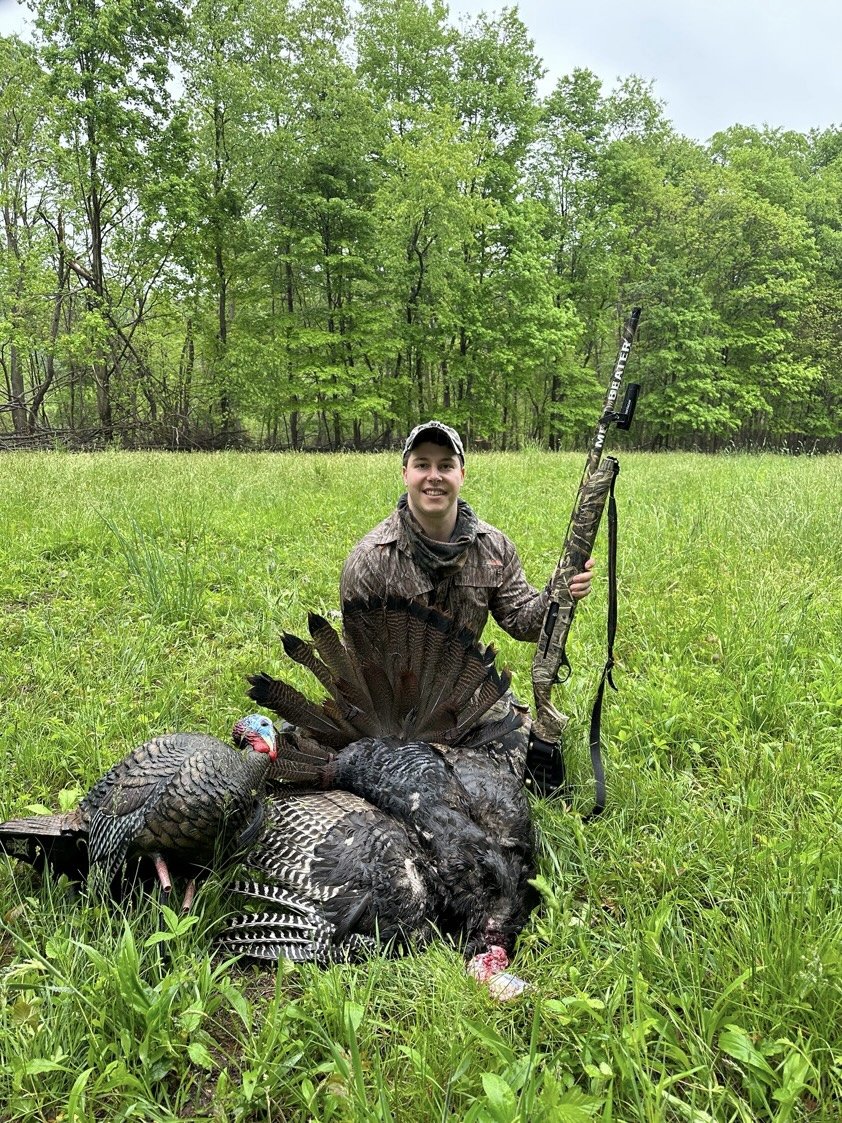
5 Turkey Hunting Safety Tips for Your 2024 Season From a Hunter with a Law Degree
As turkey hunting season approaches in Pennsylvania (May 4 for general season and April 27 for Youth Day), I am already seeing news stories and social media posts about hunters getting shot down south. Although it sounds incredibly difficult to screw up that bad, this happens every year.
As turkey hunting season approaches in Pennsylvania (May 4 for general season and April 27 for Youth Day), I am already seeing news stories and social media posts about hunters getting shot down south. Although it sounds incredibly difficult to screw up that bad, this happens every year. I used to think most people had baseline competence, but after 20 years of turkey hunting experience, I no longer think that. So, I thought I’d cover the basics on turkey hunting safety so you don’t get filled with lead or TSS this year and end up the hospital, and subsequently in my office for a consultation.
TIP #1:
DON’T MOVE.
Let’s start with a big one. WHEN YOU SEE ANOTHER HUNTER, DON’T MOVE. You would think that people wouldn’t just shoot at movement in the woods, but every year people somehow mistake a guy sitting against a tree in mossy oak for a right white and blue head of a gobbler. It’s so dumb its actually impressive. If you are new to chasing thunder chickens and don’t believe me, just yesterday I saw this happened in Mississippi:
Here’s another recent one (March 18, 2024) from down in Florida where a guy took a shot in the dome: https://www.wfla.com/news/florida/florida-hunter-mistakes-man-for-turkey-shoots-him-in-the-head-police-say/. Now, the Florida story is a guy shooting at a decoy which I guess is more understandable but still painfully stupid and less avoidable. I have two stories on those instances I will tell you later.
The main point here is most hunters (believe it or not) get shot by waiving when they see a hunter to notify the other hunter of their location and when the shooter does not even see a decoy. The good news is this is entirely avoidable. When you see another hunter, do not move at all. Use your voice and let the other guy know you are there. Very simple. Congrats, your chances of getting shot this year just went down considerably.
TIP #2:
DO NOT STALK TURKEYS
You can only sit and call to turkeys in Pennsylvania for this reason. You of course can (and often must) use woodsmanshipto outsmart the bird, but never stalk hen clucks or cadences, or even jake gobbles. Any one of those can be a hunter calling. Yet every year, people ignore this rule which results in close calls or accidents.
I’ve got two personal examples where I had a close call due to violations of this rule.
Let’s go back to 2017. I was seeing my girlfriend, now wife, down near McCandless for the weekend when her friend Nichole wanted to go turkey hunting for the first time. Far from where I normally hunt, I figured I’d just take her to the Wexford Gamelands in Allegheny County. Never hunted there before but I assumed, even if we went in blind, we may hear a gobble and that would make Nichole happy. We get to the parking lot an hour before legal and get set up 40 minutes before legal. I have one of those cheap foam hen decoy ten yards from us in a small opening and we are tucked up against a big blowdown tree.
About 15 minutes before legal I get on my Talkin’ Stick glass call and start with a intermittent soft purrs. A couple minutes later I hear consistent, LOUD crunching behind us and hen breeding cadences from a novice caller. I look behind us and a guy with a bright headlamp on was stalking up to where he was hearing the purrs which was, as described above, putting myself and Nichole in danger. I did not move and yelled at the guy to make our position known. He walked away. I knew I was in yuppie country, but I will admit I was shocked at what had just happened. Thinking it could not get any worse, we kept hunting.
At 8 a.m. after hearing nothing I was thinking we should pick up and take a walk. My dad always said “give it five more minutes” when you want to leave and so that’s what I just told myself. During those last five minutes, I hear some heavy thuds on the main trail not 15 yards from our opening we set up on. A few seconds later I look to my right and see a gun barrel pointing at my hen! Before I could speak, I hear, “no son, that’s a female turkey.” A father and son, the son about 16, wearing blaze orange hats stepped out from the thicket overgrowth on the trail and kept walking. In more disbelief than I was just as it was getting light, I said to Nichole we were getting the hell out of there.
Over the years I have found it is much more effective to use a jake decoy. If I was using one on that public ground that day, that kid would be buying me another decoy and someone could have gotten hurt. But to recap, I was stalked twice that morning and it almost caused some serious problems. Unless you see the bird you are calling to, just don’t go after it.
Even if you think you are the only one on the property, it still isn’t a great idea. Fast-forward to the 2023 season, it was hot morning in mid-May and the birds weren’t talking as usual. I’m with my dad behind his place at a farm we have hunted for decades, and we were the only ones with permission. I have my Avian X half-strut I bought when I was a broke college kid and killed a pile of birds over on an old cornfield edge where I knew the birds fed during the mid-mornings. I was only hen calling when I heard movement to my right that sounded like scratchings at the time. I reposition and wait to see what it was. I see black, but much higher than a turkey. I then see blue, but a lot of it, and more like a mid-blue. Out steps some Amish fella and he raises his shotgun at my precious decoy. I holler at him. He looked at me, smiles and walks away.
Apparently, he got permission from the landowner, and I have no idea how he even got back there or why he decided to come to that area of a county where few Amish live. Either way, I applied the same safety principle of not moving and vocalizing which saved me, and certainly my decoy. People are going to stalk turkeys. They shouldn’t, but they do. Just remember this article when this happens to you.
TIP #3:
DO NOT WEAR RED, WHITE, BLUE OR BLACK
Going back to that Amish guy, he was wearing a black Amish hat. Terrible idea. The blue was also a bad idea because a gobbler’s head can be red, white, or blue, but they can also see color, so that guy probably wasn’t killing anything that day. Because turkeys can be any of the colors, just don’t wear ‘em or you are asking for trouble. Simple as that.
TIP #4:
DO WEAR ORANGE POST-SUCCESS
I actually don’t do this as much as I should. Every turkey vest these days comes with a built-in orange square in the back you can pop out when you shoot a bird to protect you from the numbskulls who shoot at movement or non-camo. You can also keep an orange hat in your vest/fanny pack that is more visible because it can be seen 360 degrees. Is this a law? No, but its smart, and you should do it. Especially on public ground.
TIP #5:
SHOTGUN ROUND SELECTION
Surprisingly, a lot of guys get hurt even before the season attempting to shoot rounds their gun or gun/choke setup cannot handle. Do not shoot 3.5” shells if your shotgun only takes 3”. It says what your gun takes on the barrel. If it doesn’t, use the Google machine. Make sure your selected choke is rated for what you are shooting. Don’t use steel shot for chokes that aren’t rated for it. It often says so on the choke. If you are a big baller and shoot TSS, the same rule applies. You can only blame yourself if you don’t follow these rules, and I’ll tell you that in person in my office when you want to sue the gun/choke company. Sorry, pal, you’re the reason “caliente” is on my coffee cup. The good news is, these blunders and therefore injuries are entirely avoidable with minimal effort and common sense.
CONCLUSION
Some of these “tips” may be obvious to you, but it’s always a good idea to review them and even hear some stories where they were useful. There’s a 99.9% chance, and yes, I made that up, that you won’t get shot this year, but there’s always one. Don’t be that one. Good luck this season!
Here’s a playlist of turkey hunts either filmed or edited by the author: https://youtube.com/playlist?list=PLJ7y_mBtxMklYBJqAtsO7Attlir_ucCnV&si=VnHeOvPCyV76HuWT
SMB M&A - Intellectual Property (IP) Rights: Guarding the Business's Creative Treasures
Have you ever thought about what makes a company unique? It's not just the products or services—it's also the creative treasures, the Intellectual Property (IP). Here's why understanding IP is crucial when buying a business:
1. Patents, Trademarks, and Copyrights: Imagine these as the superhero capes of the business world. Patents protect inventions. Trademarks safeguard brand names and logos. Copyrights cover creative works. Check if these capes are in good shape and truly owned by the business.
2. Ownership and Validity: It's like checking the deeds of a house. Ensure the business owns the IP. Sometimes, there might be shared ownership or disputes that need sorting out. Also, check if these rights are still valid and have yet to expire.
3. Trade Secrets: Think of these as secret recipes. Businesses often have unique ways of doing things that give them a competitive edge. Ensure the company has sought to keep these secrets safe and discover what they are.
4. Infringement Risks: Just as you'd check if a house has any ongoing neighbor disputes, assess if there are any IP disputes. Are they using someone else's patented technology without permission? It's crucial to avoid stepping into a legal minefield.
Why is this a Big Deal for You?
Imagine buying a painting without confirming its authenticity or knowing if someone else claims to have painted it. IP is like the signature of a business—it defines its identity. Here's why you should pay attention:
Protecting Value:
Strong IP adds value to a business. It's like having a vault full of treasures. Ensuring these treasures are well-protected means you're not buying fool's gold.
Avoiding Legal Hassles:
Uncovering potential IP issues beforehand is like checking for hidden traps in a maze. It prevents you from getting entangled in legal battles that could drain your time and resources.
Future-proofing:
Knowing the state of the business's IP helps you to plan for the future. Are there opportunities to expand the brand? Are there risks that need addressing to secure the company's creative assets?
Negotiation Power:
Understanding the IP landscape gives you negotiation leverage. If there are issues, you can adjust the deal terms accordingly or work with the current owner to resolve them.
Intellectual Property is the beating heart of a business's uniqueness. It's what sets it apart in a crowded marketplace. Taking the time to understand and protect these creative assets ensures that you're not just buying a business. You're acquiring a legacy of innovation and brand value.
*Disclaimer: this article is for informational purposes only. It is not providing legal advice. It does not create an attorney-client relationship.
SMB M&A - Contracts and Agreements: Unraveling the Business Web
Picture this: You're about to buy a business, and it's like opening a treasure chest. But instead of gold coins, you find contracts and agreements. These legal documents are the backbone of any business.
Picture this: You're about to buy a business, and it's like opening a treasure chest. But instead of gold coins, you find contracts and agreements. These legal documents are the backbone of any business. Here's why you need to pay attention:
1. Material Contracts: Think of these as the VIP passes to the business world. Material contracts are big deals with customers, suppliers, and other key partners. Peek into them to understand the relationships and commitments. Are there any contracts that could make or break the business?
2. Change of Control Provisions: It's like the fine print in a movie ticket. Some contracts have this clause that says, "If the business changes hands, we need to know." Look for these. You don't want any surprises when you take the reins.
3. Restrictions and Limitations: Every business has its own set of rules. Check if any restrictions might tie your hands. For instance, are there agreements preventing the company from expanding or entering new markets?
Why Should You Care?
Imagine buying a house without knowing about the mortgage or any pending repairs. Contracts and agreements are like the blueprint of the business. Here's why they matter:
Risk Management:
Knowing what's in the contracts helps you spot potential risks. Are there any pending lawsuits? Are there any deals that could go south? It's like having a roadmap to navigate potential pitfalls.
Negotiation Power:
Once you know the contracts inside out, you're armed with knowledge. This gives you a stronger position during negotiations. You can ask for adjustments or clarifications based on what you've uncovered.
Smooth Transition:
Have you ever tried changing the engine of a moving car? It's tough and dangerous! Contracts ensure a smooth transition. You know what you're inheriting, and there are no sudden surprises post-acquisition.
Planning:
Contracts often reveal commitments for the future. It's like a sneak peek into what's coming. Are there upcoming renewals, or are contracts expiring soon? This helps you plan for the road ahead.
In short, contracts and agreements are the backstage passes to the business show. They might not be the most glamorous part, but they hold the key secrets to a successful acquisition. Take the time to understand them, and you'll be well on your way to unlocking the business's full potential.
*Disclaimer: this article is for informational purposes only. It is not providing legal advice. It does not create an attorney-client relationship.
SMB M&A - Corporate Structure and Governance
Understand the target company's corporate structure. It is like taking a closer look at its organization and operation. It's essential as it affects decision-making, responsibilities, and the success of your acquisition.
Understand the target company's corporate structure. It is like taking a closer look at its organization and operation. It's essential as it affects decision-making, responsibilities, and the success of your acquisition. Here are some key points to consider:
Organizational Documents: Check the company's rulebook, –articles of incorporation, and bylaws. These documents outline how the company is supposed to function. Any surprises in there could mean trouble down the line.
Ownership Structure: Figure out who owns what. Look at the shareholding structure and any agreements among shareholders. Make sure there are no hidden surprises or disputes that could complicate the deal.
Governance: This is all about how the company is managed and how decisions are made. A solid governance structure ensures that everyone is on the same page. Here's what you need to focus on:
Board of Directors: Know who's at the helm. Check out the board of directors, their roles, and their qualifications. Any red flags here could impact the company's strategic direction.
Decision-Making Processes: Understand how decisions get made. Is it a smooth process or a tangled web? You want to make sure you're stepping into a well-organized system.
Compliance with Laws: Ensure the company follows the rules. Check if it complies with legal requirements and industry regulations. Non-compliance could lead to headaches and fines.
Shareholder Agreements: Read the fine print. Look at any agreements among shareholders. Are there clauses that might affect the deal or your plans for the company? Why Does This Matter for You as a Buyer?
Imagine buying a car without knowing if it has a good engine or the brakes work. Corporate structure and governance are like checking under the hood of your potential business. Here's why it's crucial:
Smooth Transition: A well-structured company is more likely to transition smoothly. This means less disruption for you and the business.
Reduced Risks: Understanding the governance and structure helps spot potential problems early. It's like doing a health check-up before committing.
Strategic Planning: Knowing how decisions are made allows you to plan for the future. You can see if the company's structure aligns with your goals and if changes are needed.
Essentially, it's about ensuring you're not inheriting a messy structure. Governance issues could come back to haunt you. Take the time to dig into these details, and you'll be better prepared for a successful acquisition.
*Disclaimer: this article is for informational purposes only. It is not providing legal advice. It does not create an attorney-client relationship.
SMB M&A - Intro
Legal due diligence in M&A (Mergers and Acquisitions) for SMBs (small and medium-sized businesses) involves thoroughly examining the target company's legal aspects. You want to identify risks and liabilities that could impact the transaction's success.
Legal due diligence in M&A (Mergers and Acquisitions) for SMBs (small and medium-sized businesses) involves thoroughly examining the target company's legal aspects. You want to identify risks and liabilities that could impact the transaction's success. Here are essential components of legal due diligence in M&A for SMBs:
1. Corporate Structure and Governance: Review the target company's organizational documents. Look at the articles of incorporation, bylaws, and shareholder agreements. Examine the company's corporate governance structure. Ensure compliance with relevant laws and regulations.
2. Contracts and Agreements: Analyze all material contracts. This includes customer contracts, supplier agreements, leases, and employment contracts. Identify any change of control provisions or restrictions that may affect the transaction.
3. Intellectual Property (IP) Rights: Assess the target company's intellectual property portfolio. This includes patents, trademarks, copyrights, and trade secrets. Confirm ownership and validity of IP assets and identify any potential infringement issues.
4. Regulatory Compliance: Verify the target company's compliance with industry-specific regulations and licensing requirements. Identify any ongoing or potential regulatory investigations or legal actions.
5. Litigation and Disputes: Review the target company's litigation history. Identify any pending or potential legal disputes. Assess the potential financial impact of ongoing litigation on the transaction.
6. Employee and Labor Matters: Examine employment contracts, employee handbooks, and benefit plans. Assess any labor or employment-related liabilities, such as pending claims or violations.
7. Environmental and Regulatory Issues: Investigate environmental compliance and potential liabilities. Identify any regulatory issues that may affect the target company's operations.
8. Financial Matters: Review financial statements and ensure compliance with accounting standards. Identify any outstanding tax liabilities or issues.
9. Real Estate: Examine the target company's real estate holdings and leases. Identify any environmental or zoning issues related to the properties.
10. Data Privacy and Security: Assess the target company's data privacy and security practices. Identify any potential data breaches or compliance issues.
11. Insurance Coverage: Review the target company's insurance policies. Be sure to assess coverage and potential gaps. Identify any outstanding claims or issues related to insurance coverage.
Legal due diligence is crucial for SMBs engaging in M&A transactions. It helps the acquiring company make informed decisions and negotiate terms. It also mitigates potential risks associated with the target business. It is conducted in collaboration with legal professionals specializing in M&A transactions.
*Disclaimer: this article is for informational purposes only. It is not providing legal advice. It does not create an attorney-client relationship.
Understanding Pennsylvania's Criminal Trespass Law: A Comprehensive Overview for Hunters and Landowners
If you will be hunting in Pennsylvania or if you own land in Pennsylvania, it is important to understand our state’s trespass law. For years, I have watched never-ending online squabbles over what the law is and isn’t. Some are experienced hunters and others are even law enforcement officers who make false claims about the law because “that’s how it’s always been done.”
Before going to law school, I hunted my whole life, deer, turkey, small game, etc., doing my best to avoid getting in trouble for a law I didn’t even know. “Can I get arrested for accidentally going on private property?” “If I find someone on my property that should not be there, what can I do?”
That’s why I found it necessary to write this article; to explain the PA trespass law so that all sportsmen and landowners understand the ground rules.
INTRODUCTION
If you buy and pay taxes on a solid piece of hunting land, you should be able to have it all to yourself? Right? Right. Pennsylvania's criminal trespass law Title 18 § 3503 et seq. plays a crucial role in protecting the rights of property owners. It defines the boundaries of acceptable behavior on private property and outlines the consequences for those who violate these boundaries.
WHAT IS CRIMINAL TRESPASS?
Generally, criminal trespass occurs when an individual enters or remains on another person's property without permission. That said, Pennsylvania law distinguishes between different degrees of criminal trespass based on the circumstances of the offense.
DEGREES OF CRIMINAL TRESPASS
For hunter knowledge purposes, we will not be addressing building trespasses, but merely a simple trespass, a defiant trespass, and an agricultural trespass[1] as set forth in the PA trespass law.
I. Simple Trespasser
Let’s start with how PA defines a Simple Trespasser. To become a simple trespasser, you must, without “license[] or privilege to do so,”…“go onto a property with for the purpose of:
(i) threatening or terrorizing the owner or occupant of the premises;
(ii) starting or causing to be started any fire upon the premises;
(iii) defacing or damaging the premises; or
(iv) (unlawfully taking secondary metal from the premises.
18 Pa.C.S. § 3503(b.1). (Emphasis Added.).
Note the “for the purpose of” language and let’s do an exercise to better understand the statute. You go onto another person’s property that it is not posted. Does this mean you are a simple trespasser? Under the statute, probably not. Unless you came there to damage the property, set it on fire, or harass the owner, you are not committing any crime.
Where I think people get confused is that you are still trespassing, just not in the criminal sense. You may still be sued for civil trespass which just requires, regardless of intent, that one is on a property they do not own. Awards for civil trespass (if no property damage) can be as low as is $1.00 for “nominal damages” and, depending on the jury and state, punitive damages may or may not be awarded. [2]
It is hard to be a simple trespasser if you are simply trying to hunt because you have to know that you are not supposed to be on the property and you have to go onto someone else’s property with the intent to harass the owner or damage property. I have never seen anyone do that in my two decades of hunting experience. But, if you are somehow facing simple trespasser charges, you probably have more serious charges to deal with.
II. Defiant Trespasser
Now for example, if the landowner sees you on the property (even if you are not a simple trespasser) and tells you to leave, you must leave or else you will be committing a criminal trespass, a defiant trespass, which has much more serious criminal ramifications.
The current defiant trespass statute reads:
Criminal Trespass - Defiant Trespasser (Title 18 § 3503(b)): A person commits an offense if, knowing that he is not licensed or privileged to do so, he enters or remains in any place as to which notice against trespass is given by:
(i) actual communication to the actor;
(ii) posting in a manner prescribed by law or reasonably likely to come to the attention of intruders;
(iii) fencing or other enclosure manifestly designed to exclude intruders. (Emphasis Added).
The defiant trespass language includes a “notice” requirement that, on top of someone telling one person to leave a property, notice can also be a properly posted property and certain fences. Properly posting the property can now be done via PA’s Purple Paint Law that merely requires markings of purple paint, at least 3 feet from the ground and 8x1” in size be no more than 100 feet apart. See, 18 Pa.C.S. § 3503(b)(vi). You can still use “POSTED” signs to accomplish the same. Then, any person on a property will be properly noticed under the law, and if they are on a property without permission, they are a defiant trespasser.[3]
If there is still any confusion as to a general rule for either simple or defiant trespass, the Supreme Court of Pennsylvania ruled in Commonwealth v. Carter that PA’s criminal statute has a scienter requirement that requires knowledge of wrongdoing for the criminal trespass statute to apply. 482 Pa. 274, 277 (Pa. 1978) (Emphasis Added). As we have discussed, per the PA law, “knowledge” is the intent to cause harm as in simple trespasser, or “notice” (posting property or a demand to leave) as to a defiant trespasser.
Criminal Penalties
Okay, so now we have a decent grasp on what criminal trespass is, what are the punishments for each degree of trespass? Generally, they may include fines, probation, community service, or imprisonment. The severity of the punishment is often determined by factors such as prior criminal history and the presence of aggravating circumstances. Even still, per the black letter law:
· Defiant Trespasser (Title 18 § 3503(b)): This is a misdemeanor of the third degree, punishable by up to one year in prison and a fine of up to $2,500.
· Simple Trespasser (Title 18 § 3503(b.1)): This offense is categorized as a summary offense, resulting in fines and potential imprisonment for up to 90 days.
· Agricultural Trespasser (Title 18 § 3503(b.2)): Agricultural trespass is a summary offense, with penalties similar to those for simple trespassing.
CONCLUSION
Understanding Pennsylvania's criminal trespass law is essential for landowners to enforce their property rights and for hunters to avoid unintentional violations and legal consequences. By respecting the rights of property owners and adhering to the boundaries set by the law, hunters can contribute to a safer and more enjoyable hunting season without having to worry about being dragged into court. If unsure about the legality of entering a property, seeking permission from the owner or responsible party is always the best plan.
If you still have questions about the law or are facing a criminal or civil trespass issue, contact an attorney at The Skeen Firm.
[1] An Agricultural Trespasser pertains specifically to entering agricultural or other lands used for crop or livestock and has substantially similar requirements as a defiant trespasser. See, Title 18 § 3503(b.2) Therefore, agricultural trespass will not be discussed at length.
[2] A good read on civil trespass damages was penned by the Wisconsin Supreme Court in Jacque v. Steenberg Homes, Inc., 209 Wis. 2d 605, 609 (Wis. 1997). (Not binding law in PA).
Protect Yourself (and Your Property) with a Prenup
What exactly is a prenup? A prenuptial agreement, sometimes called a “prenup,” is an agreement between future spouses regarding their marriage. It may spell out how to address property and assets, as well as support obligations, in the event of the dissolution of their marriage. When a marriage ends, the property and assets owned by both spouses, individually or jointly, comprise the marital estate. The Court then considers a list of 11 factors in determining how to distribute the marital estate between the spouses and will also decide whether the property is non-marital.
If you listened to hip-hop music or pop radio in the mid-to-late 2000s, you no doubt heard Kanye West’s song “Gold Digger,” in which he hollers, “We want prenup. We want prenup!”
What exactly is a prenup? A prenuptial agreement, sometimes called a “prenup,” is an agreement between future spouses regarding their marriage. It may spell out how to address property and assets, as well as support obligations, in the event of the dissolution of their marriage. When a marriage ends, the property and assets owned by both spouses, individually or jointly, comprise the marital estate. The Court then considers a list of 11 factors in determining how to distribute the marital estate between the spouses and will also decide whether the property is non-marital.
The parties will likely engage in discovery to develop a clear understanding of what each spouse owns. The discovery process may be lengthy, time-consuming, and costly. When parties go through the discovery process and an equitable distribution hearing, they may risk depleting a portion of their assets on attorney and expert fees.
On top of discovery and equitable distribution, a divorcing couple is likely to encounter a claim for spousal support and/or alimony. Litigating these claims adds to the overall cost of a divorce and typically increases the level of discord between the parties.
This unnecessary financial cost and emotional toll of litigation can be avoided by entering into a prenup which specifies the assets and debts of each spouse as they enter the marriage, which assets the couple wishes to split should they divorce, and on what percentage, whether the spouses will be jointly responsible for individual debts, and any support one party may pay to the other or maybe that both spouses are waiving their right to file for support.
So, what makes a prenup valid in Pennsylvania?
The answer is surprisingly simple, your prenup must be in writing and signed by both parties. So please take all the content discussed above, get them in writing, and ensure both parties sign. Do you need an attorney for this? The attorneys in us say yes, but it can be a DIY, depending on your situation. If you hire an attorney, the best thing you can do is hire separate counsel to negotiate the best agreement possible.
Now, sure, the thought is, but attorneys are expensive. So, just how much does a prenup cost? Well, that depends. However, expect to pay around $1,5000 per party if the assets, finances, and other factors are simple. Again, this process is situation-driven.
Prenuptial agreements are highly customizable and should be tailored to your needs. If you’re already married, you can still protect yourself by negotiating a postnuptial agreement with your spouse, but that is a topic for another day. The Skeen Firm offers Everyday Legal Advice and welcomes the opportunity to discuss a prenuptial or postnuptial agreement with you.
Benefiting Your Family - Flat Fee Family Law
By now, you know The Skeen Firm wants to handle your Family Law matter on our Flat Fee platform. We get it; no divorce is fun. Custody battles are tough. And equitable distribution is often a complex challenge. That is why we have a flat fee approach; predictability is our first method of promoting stability.
But from a traditional legal approach to running a firm with a family law practice, pricing through a flat fee makes no sense. Trust us, if we had a dollar for every time we’ve heard it won’t work, we would retire. But, to us, that is where the magic begins—a flat fee, regardless of the practice area, forces efficiency in how your lawyer works. The incentive is working efficiently to find a solution as quickly as possible, benefiting you, the client, the most. We consider that a win.
The quest for efficiency also forces us to implement and use systems and processes. While some will say that the law is no place to function like McDonald's, we say it exactly is. The law practice, just like operating a McDonald’s, is all about customer service. Most would agree McDonald’s isn’t gourmet, but they can’t deny that you can get the same meal in Washington, PA, as in Kalamazoo, MI. That is the definition of process and system-driven customer service. Why should the law be any different?
That is right, it shouldn’t. Customer service and experience are precisely why we focus on our processes and systems. Realizing that arriving at a solution in the most stress-free manner possible is the highest aspiration of our clients mandates a process and system-driven firm. Automating where we can—think of documents and other high-time-consuming or billable activities—allows us to focus more on client communication in a proactive way.
This communication forward approach starts at our discovery call, where we listen to your goals without offering any advice. From there, our intake process collects all the information needed to move your case forward as efficiently as possible. At your consultation, we can tell you more about what to expect and your fees and give you a strategy to achieve your goals. This is possible only if we get as much information as possible from the intake form. After we are engaged, you can expect regular updates on the progress made toward the strategy discussed in your consultation. What is the point of all of this? Alleviating as much stress as possible from a high-pressure, high-emotion environment. We built our system so we can work our system for you and let you live your life.
So while the flat fee is the headline maker, the system and process do the heavy lifting. With them, we can focus on resolving your case efficiently instead of traditional money makers for law firms, such as document drafting and reactive communications. Both only add stress to an already stressful situation. We are always here and ready to do what we do to help you in a system-driven, flat-fee, stress-reducing way.
*Disclaimer: the advice provided is for informational purposes and is not intended as legal advice. It should not be relied on, nor construed as creating an attorney-client relationship.